Skip to content

Haloalkanes and Haloarenes

Class 12

9 previous-year questions from this chapter every option and the correct answer, free · where the marks are

1. Nucleophilic substitution: SN1 and SN2

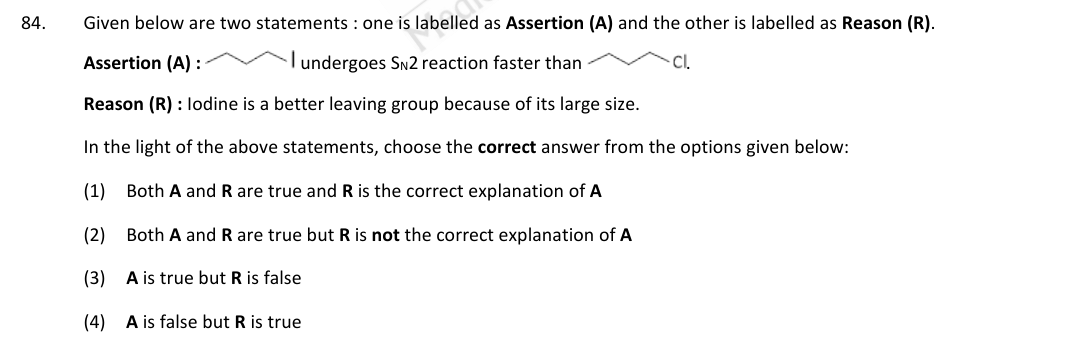
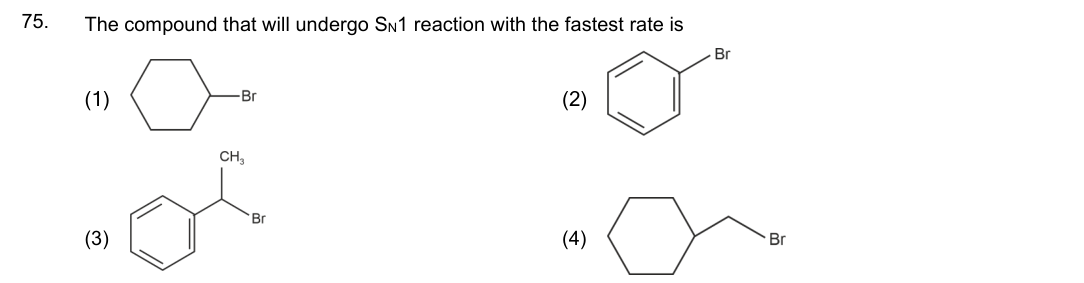
Exam focus: SN2 is a single backside attack that gives complete inversion of configuration (Walden inversion) at the stereocentre; SN1 goes through a planar carbocation attacked from either face, giving near-racemisation instead — "inversion versus racemisation" is the fastest way to tell the two mechanisms apart in a question stem. SN1 favours 3° substrates and polar protic solvents that stabilise the carbocation; SN2 favours 1° substrates and is blocked by bulky groups at the reacting carbon.

Haloalkanes and Haloarenes — Full Chapter (incl. SN1/SN2)

Lakshya NEET

Full-chapter lecture that covers SN1 and SN2 mechanisms as part of the whole chapter, not an isolated SN1/SN2-only video.

2. Haloarenes: reactions and directing effects

Exam focus: Aryl C–X bonds are shorter and stronger than alkyl C–X bonds, because the halogen's lone pair conjugates into the ring, which is exactly why chlorobenzene resists the SN1/SN2 chemistry that works readily on an alkyl halide. Nucleophilic substitution on a haloarene needs either forcing conditions (high temperature and pressure with NaOH) or a strong electron-withdrawing group like NO₂ at the ortho/para position to make the ring susceptible.

Chemical Reactions of Aryl Halides and Directing Effects

Competition Wallah

Dedicated lecture on aryl halide reactions and directing effects, part of a numbered haloalkanes/haloarenes series.