Skip to content

Current Electricity

Class 12

26 previous-year questions from this chapter every option and the correct answer, free · where the marks are

1. Ohm's law, resistivity, temperature dependence

Exam focus: Resistivity is a property of the material only — stretching a wire to twice its length doubles R (since R = ρl/A) but leaves ρ itself unchanged, and resistivity rises with temperature for metals but falls for semiconductors.

Current Electricity 03: Effect of Temperature on Resistance/Resistivity

Physics Wallah - Alakh Pandey

Covers the ρ–T behaviour for conductors vs semiconductors — the part of this subtopic NEET actually tests — after a quick recap of Ohm's law and R = ρl/A.

2. Cells, EMF, internal resistance, combinations

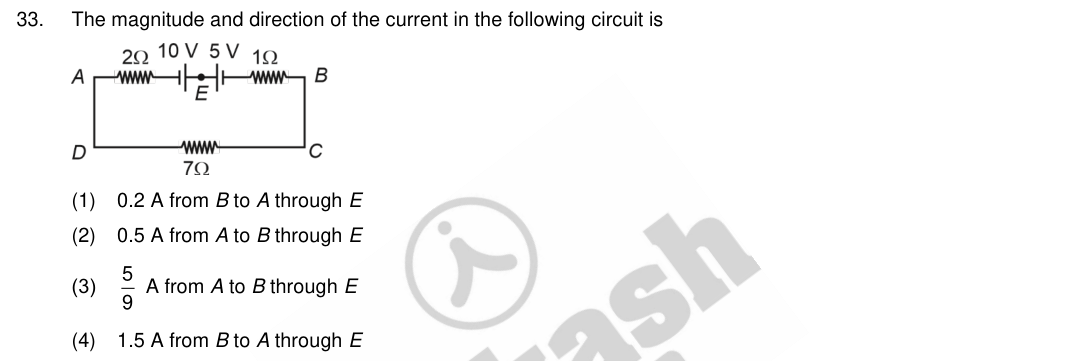
Exam focus: Terminal voltage equals EMF only on open circuit — the moment current is drawn, V = E − Ir is strictly less than E. Cells in series suit a large external resistance; cells in parallel suit a small one, where less internal resistance matters most.

Combination of Cells: Series, Parallel and Mixed Grouping

Physics Wallah - Alakh Pandey

Thorough lecture on series, parallel and mixed grouping of cells with derivations and numericals; assumes basic EMF/internal-resistance definitions from the preceding lecture.

3. Kirchhoff's rules, Wheatstone bridge, potentiometer

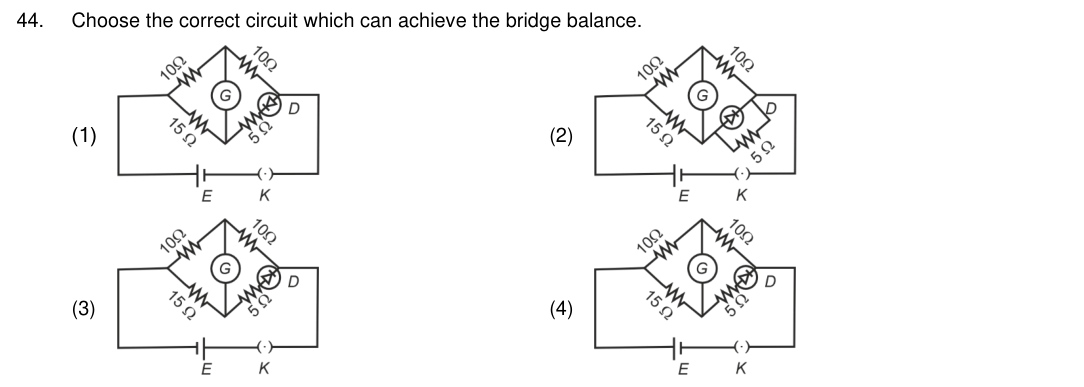
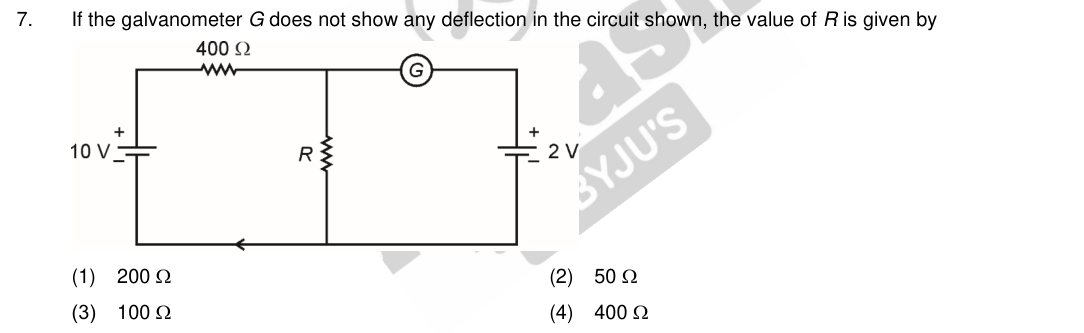
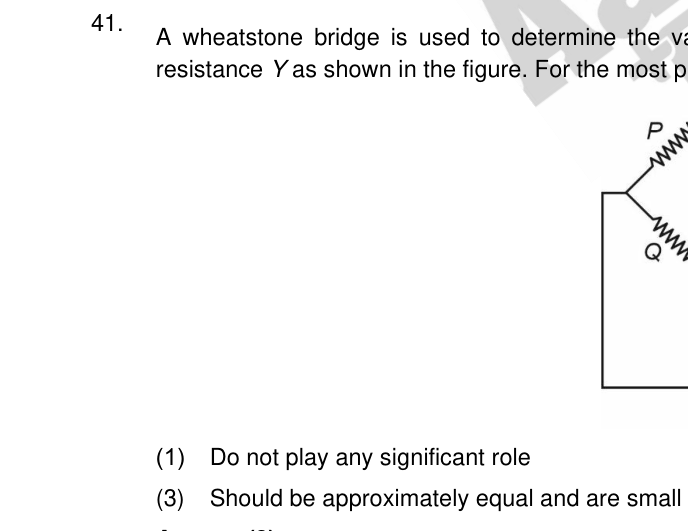
Exam focus: A potentiometer's advantage over a voltmeter is that, at balance, it draws zero current from the cell being measured, while a voltmeter always draws some and reads slightly low. In a balanced Wheatstone bridge, only the galvanometer branch carries zero current.

Kirchhoff's Laws, Wheatstone Bridge & Potentiometer

LearnoHub - Class 11, 12

One pass through all three: Kirchhoff's junction and loop rules, the Wheatstone bridge balance condition, and the potentiometer's null-point comparison principle.